
Pressure Washing Estimate Calculator: Project Cost, Time & Water Usage
Bidding jobs purely on square footage leads to underpricing and machine damage. This free pressure washing estimate calculator uses your machine's PSI and GPM to output exact run times, chemical dilution requirements, and water supply deficits.
Why You Need to Calculate Water Supply (GPM Deficit)
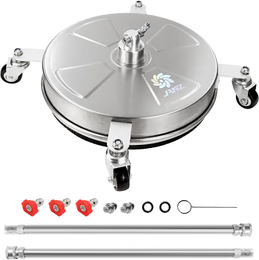
The biggest mistake new contractors make is hooking a 4.0 GPM commercial pressure washer up to a residential spigot that only outputs 2.5 GPM. If you don't calculate this deficit, your pump will run dry, causing cavitation and destroying the manifold. Our tool calculates exactly how long a standard 50-gallon buffer tank will last under these conditions. To learn more about how contractors manage commercial flow and buffer tanks, read our guide on 4 GPM Pressure Washers. To maximize cleaning speed on large flat driveways, pair your machine with a properly sized attachment using our Surface Cleaner Size Calculator.
Solving Pricing Ambiguity: Algae vs. Dust
Bidding 2,000 square feet of heavy, neglected algae at the same rate as 2,000 square feet of light summer dust will destroy your profitability. True pricing requires balancing your hourly labor rate against the surface material and the grime severity. Use the calculator below to perform "what-if" scenarios—adjusting the soil level and your target hourly rate (national USA averages range from $75 to $160/hr in 2026) to find your exact break-even point.
Commercial Contractor Bidding & Profit Margins
Running a professional exterior cleaning business? If you need to calculate itemized crew labor wages, chemical batch costs, equipment wear reserves, and true profit margins (markup vs. margin math), use our dedicated Pressure Washing Pricing & Profit Margin Calculator.
2026 Pressure Washing Price Per Square Foot Benchmark Guide
Whether you are pricing an upcoming project as an exterior cleaning contractor or budgeting as a homeowner, square-foot unit pricing provides a fast sanity check. In 2026, standard USA exterior cleaning rates range between $0.15 and $0.75 per square foot, depending on surface porosity, elevation risks, and chemical treatment requirements:
| Exterior Surface Type | National Avg Rate (Per Sq. Ft.) | Typical 1,500 Sq. Ft. Cost | Primary Cost Driver |
|---|---|---|---|
| Concrete Driveways & Sidewalks | $0.15 – $0.30 | $225 – $450 | Fast surface cleaner passes; pre-/post-treat SH biocide |
| Vinyl Siding (House Soft Wash) | $0.20 – $0.45 | $300 – $675 | Low-pressure downstream chemical application; ladder safety |
| Stucco, Dryvit & Painted Brick | $0.25 – $0.50 | $375 – $750 | Deep porous biofilm dwell time; delicate low-pressure rinsing |
| Asphalt Shingle Roof Cleaning | $0.35 – $0.75 | $525 – $1,125 | Fall protection, steep pitch, high-strength 4% SH soft wash |
| Wood Decks & Fences (Cedar / Pine) | $0.30 – $0.65 | $450 – $975 | Gentle sodium percarbonate wash + mandatory oxalic acid neutralization |
| Commercial Parking Lots & Flatwork | $0.10 – $0.22 | $150 – $330 (per 1,500 sq ft) | Large unobstructed square footage; oil degreasing additives |
The Minimum Service Call Rule: Most professional contractors enforce a $125 to $175 minimum trip charge regardless of square footage. This covers travel fuel, equipment setup/breakdown, hose staging, and machine unloader cycle checks even for small 250 sq. ft. front porches. Use the interactive calculator below to calculate exact labor hours, water usage, and pricing for your specific project.
Job Time & Cost Estimate Calculator
Safe Flow: Sufficient Water Supply
Your water spigot provides plenty of water. Your pump will stay safely fed with zero risk of running dry.
Machine Demand: 2.0 GPM | Spigot Flow: 3.0 GPM (Surplus: +1.0 GPM)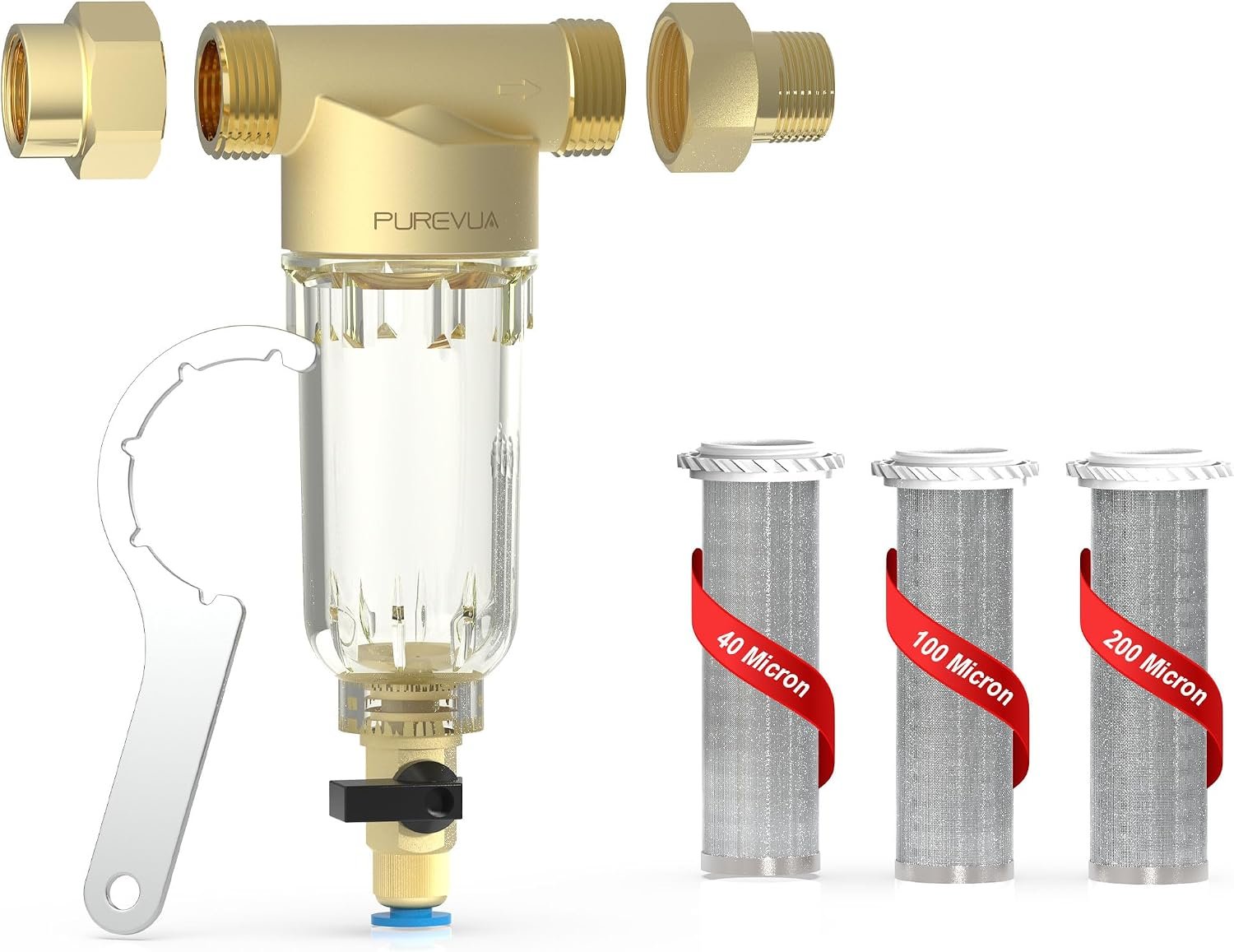
How to Estimate a Pressure Washing Job: Step-by-Step
Whether you are bidding your first residential cleaning job or budgeting a weekend DIY home project, accurate estimating boils down to three simple numbers: how much surface area you have to clean, the type of material and staining, and how much water your pressure washer can push every minute.
Use this straightforward 4-step framework to price and schedule jobs with confidence:
- Measure Your Total Square Footage: For flat ground like concrete driveways, sidewalks, and patios, multiply length by width (e.g., a 20 ft × 40 ft driveway is 800 sq. ft.). For multi-story homes, calculate the footprint of the exterior walls and multiply by the number of floors.
- Identify the Surface Material: Hard concrete can handle faster surface cleaner passes and higher pressure (up to 3,000–3,500 PSI). In contrast, delicate vinyl siding, painted wood, and composite decking must be washed gently with low pressure (<1,500 PSI) using specialized soaps to prevent gouging or water penetration behind the walls.
- Assess the Staining Level: Light winter dust or pollen rinses away quickly. Heavy green algae, black mold, or stubborn oil stains require chemical soaking time before washing, which saves your back and prevents you from having to blast high pressure over the same area multiple times.
- Factor in Your Machine's Flow Rate (GPM): A common myth is that PSI determines how fast a job takes. In reality, GPM (Gallons Per Minute) is your true speed engine. A 4.0 GPM unit cleans almost twice as fast as a 2.0 GPM machine because it can feed a larger rotary surface cleaner and wash away loosened mud instantly.
💡 Quick Contractor Rule of Thumb
Always base your pricing on square footage and expected job hours, not guesswork. Most professionals aim for an hourly earnings target of $60 to $120 per hour after chemical costs, fuel, and travel time are accounted for. If you run a commercial rig and need true margin vs. markup job costing, use our Pressure Washing Pricing & Profit Margin Calculator.
2026 Pressure Washing Price Per Square Foot Chart & Speed Benchmarks
Across the United States, exterior cleaning rates depend on local living costs and accessibility. The table below outlines typical square-foot pricing, realistic cleaning speeds, and recommended techniques for common residential and commercial jobs:
| Surface / Job Type | Average Price per Sq. Ft. | Cleaning Speed (Sq Ft / Hour) | Best Equipment & Method |
|---|---|---|---|
| Concrete Driveway & Sidewalks | $0.15 – $0.25 | 800 – 1,200 sq. ft./hr | Rotary surface cleaner (4x GPM rule) + post-rinse |
| Vinyl & Aluminum House Siding | $0.20 – $0.35 | 1,000 – 1,500 sq. ft./hr | Downstream chemical soft wash (low pressure, high soap dwell) |
| Wood Decks & Privacy Fences | $0.30 – $0.50 | 400 – 600 sq. ft./hr | Low pressure (1,000–1,200 PSI), wide 40° fan tip, wood brightener |
| Paver Patios & Natural Stone | $0.25 – $0.40 | 500 – 800 sq. ft./hr | Medium pressure surface cleaner + joint sand re-sweeping |
| Commercial Flatwork & Dumpsters | $0.18 – $0.35 | 600 – 1,000 sq. ft./hr | Heavy alkaline degreaser + hot water pressure washer |
How to Calculate Cleaning Units (CU = PSI × GPM) & Water Usage
When comparing commercial and residential rigs or estimating how fast a crew will finish flatwork, mechanical engineers and contractors use Cleaning Units (CU)—also called Cleaning Power. You calculate Cleaning Units by multiplying operating pressure by flow rate:
Cleaning Units (CU) = PSI × GPM
- Entry-Level Electric Rig (1,800 PSI × 1.2 GPM = 2,160 CU): Built for cars, patio furniture, and small wooden steps. Expect 250–350 sq. ft. per hour on concrete and roughly 72 gallons of water per hour of trigger time.
- Prosumer Gas Rig (3,200 PSI × 2.5 GPM = 8,000 CU): Handles residential driveways and two-story siding. Consumes 150 gallons of water per hour of continuous spraying.
- Commercial Belt-Drive Rig (4,000 PSI × 4.0 GPM = 16,000 CU): Runs a 16-inch rotary surface cleaner at walking pace (1,000+ sq. ft./hr) and uses 240 gallons of water per hour. To match nozzle tips to your pump's exact CU output, check our Nozzle Size Calculator or convert metric pump specs with our LPM to GPM Calculator.
The 2-Minute Bucket Test: Will Your Spigot Keep Up?
One of the costliest mistakes homeowners and new contractors make is starving their pressure washer pump of water. High-pressure pumps depend on incoming water to keep internal seals cool and lubricated. If your machine pulls 4.0 GPM but the customer's outdoor garden spigot only supplies 2.5 GPM, air pockets will form inside the pump, causing loud knocking, vibration, and expensive seal failure (known as pump cavitation).
Before starting any big job, run this easy 2-minute bucket test:
- Grab a standard empty 5-gallon bucket.
- Hook a garden hose to the outdoor faucet and turn it on full blast.
- Use the stopwatch on your phone to time how many seconds it takes to fill the bucket to the 5-gallon mark.
- Calculate your faucet's water flow using this simple formula:
GPM = 300 ÷ Seconds to Fill Bucket
Example: If your bucket fills up in 60 seconds, your spigot produces exactly 5.0 GPM (300 ÷ 60 = 5.0), which easily powers a 2.5 GPM, 3.5 GPM, or 4.0 GPM pressure washer. If it takes 120 seconds (300 ÷ 120 = 2.5 GPM), any machine rated above 2.5 GPM will require a buffer tank or intermittent pauses to avoid running dry.
Why Chemical Pre-Treatment Cuts Job Time in Half
Trying to blast away thick green algae or greasy driveways with pure high pressure alone takes twice as long, burns more fuel, and risks etching permanent tiger-stripe patterns into concrete. Pre-treating the surface with an appropriate cleaning solution does the heavy lifting for you:
- Organic Growth (Algae, Moss, Mildew): A light application of diluted sodium hypochlorite (SH) bleach breaks organic cells down in 10 to 15 minutes of dwell time. Once the roots are killed, a fast pass with a surface cleaner leaves the concrete bright and prevents fast regrowth. Check our free Chemical Dilution Calculator for exact batch and downstream recipe ratios.
- Oil & Grease Spots: Pre-treating grease stains with an alkaline degreaser or citrus cleaner lifts oil out of the porous concrete pores, allowing you to wash it away cleanly without leaving dark shadows behind.
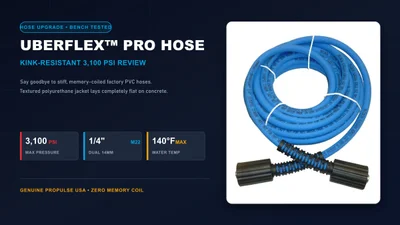
- Hose & Flow Optimization: Long runs of small-diameter hose restrict water flow and drop operating pressure. Use our Hose Friction Loss Calculator to ensure your pressure washer delivers full power to your wand.

Pressure Washing Estimation & Pricing FAQs
How much should I charge or pay for pressure washing per square foot?
In 2026, standard residential pressure washing averages $0.15 to $0.35 per square foot across the United States. Flat concrete (driveways and sidewalks) typically runs $0.15 to $0.25 per sq. ft., while house washing (vinyl siding soft wash) averages $0.20 to $0.35 per sq. ft. Delicate wood decks, fences, and steep roofs command higher rates ($0.30 to $0.50+ per sq. ft.) due to safety setup and specialized chemicals.
How long does it take to pressure wash a typical 2-car driveway?
A standard 2-car concrete driveway (about 600 to 800 square feet) takes approximately 45 to 90 minutes from start to finish when using a rotary surface cleaner and a 3.0 to 4.0 GPM pressure washer. If you use a handheld spray nozzle wand, the same driveway can take 2.5 to 3.5 hours and is much more likely to result in visible striping lines.
Why is water flow (GPM) more important than pressure (PSI) when estimating jobs?
Pressure (PSI) breaks dirt loose from the surface, but water flow (GPM) is what pushes and carries the dirt away. A 4.0 GPM machine cleans almost twice as fast as a 2.0 GPM unit because it allows you to run a 16-inch surface cleaner rather than an 8-inch attachment, saving hours of physical labor on large areas.
How do I know if my outdoor garden spigot provides enough water?
Perform the quick 5-gallon bucket test: time how many seconds it takes your garden faucet to fill a 5-gallon bucket on full blast. Divide 300 by the seconds to find your spigot's GPM. If it fills in 60 seconds (300 ÷ 60 = 5.0 GPM), it can safely supply any consumer or contractor unit up to 5.0 GPM without running out of water.
Does chemical pre-treatment really save time and money on pressure washing jobs?
Yes. Pre-treating surfaces with an appropriate cleaning solution (such as diluted bleach for organic mold or a degreaser for oil) dissolves surface grime during a 10 to 15-minute dwell time. This cuts physical trigger time by 30% to 50%, protects surfaces from harsh pressure etching, and prevents rapid algae regrowth.